Charlotte de Witte and the Weight of 889
By Theo Lindqvist·August 2, 2026
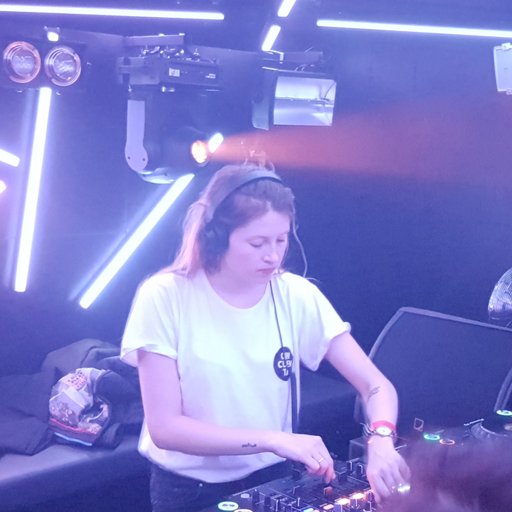
There is a version of the modern techno headliner that exists mostly as a poster: a name in large type, a silhouette in a strobe, a set that could be swapped for any other on the bill. Charlotte de Witte is not that. Her DJ Radar profile describes something more durable — an artist whose audience follows *her*, not just the format she works in.
The headline figure is a credit score of 889, built on 11,850 votes. That vote count matters as much as the score itself. A high score assembled from a thin sample is a rumour; a high score assembled from nearly twelve thousand voices is a consensus. Whatever else the data says, it says people have an opinion about de Witte and they are not shy about registering it.
The Belgian line
She is listed out of Belgium, working in techno — no crossover hedging, no genre-family drift. In a scene where the biggest names often soften their edges as their reach grows, that single-genre listing is a statement of intent. The career has scaled without the sound being negotiated down.
That scale is legible in the touring column: 202 festivals. Festival counts are the least glamorous stat on any profile and usually the most honest one. Streaming can be seeded, follower counts can be bought, but two hundred festival bookings represent two hundred separate decisions by promoters with money at risk. It is the closest thing this dataset has to a peer review.
What the platforms say
The streaming picture is unusually coherent. 1,840,356 monthly listeners on Spotify sit alongside 1,401,874 Spotify followers — a gap far narrower than the norm for dance music, where casual playlist traffic typically dwarfs committed subscribers. Roughly three of every four people who hear her in a given month have chosen to keep her. That is not passive discovery. That is retention.
The club-facing platforms line up behind it. 60,037 Resident Advisor followers is a specific kind of number: RA is where people go when they are planning to physically attend something. Pair it with 498,388 SoundCloud followers and 194,193 Last.fm listeners, and you get a profile with depth in the places that reward taste rather than reach.
Then there is Instagram: 5,557,067 followers — comfortably her largest audience, and a reminder that at a certain altitude an electronic artist becomes a cultural figure as much as a musical one. It is the number that travels furthest outside the clubs.
One figure deserves an asterisk rather than a paragraph. Her listed 44,700 YouTube subscribers sits badly out of step with everything around it, and the responsible read is not to spin a theory about it. Platform data collected at scale produces artifacts, and a single number that contradicts six others is more likely a collection issue than a revelation about audience behaviour. Noted, and set aside.
The shape of it
Strip the profile down and the structure is clean: a genre held without compromise, a country of origin that the work is now inseparable from, a touring record in the hundreds, and a streaming audience that converts listening into commitment at an unusually high rate.
DJ Radar's 889 is a summary of that, not a substitute for it. The score is what happens when club credibility and mainstream reach stop competing and start reinforcing each other — when the same artist can hold 60,037 people who read festival lineups closely and 5,557,067 who simply know the name.
That combination is rare. In techno, where the two audiences are often actively hostile to one another, it is close to the hardest thing to build.
Think the ranking is wrong?
Cast your vote and explore the full standings on DJ Radar.
Explore the ranking